Ebook Download Medieval Death: Ritual and Representation, by Paul Binski
Don't bother if you don't have adequate time to go to guide establishment and look for the favourite book to read. Nowadays, the online publication Medieval Death: Ritual And Representation, By Paul Binski is concerning provide convenience of reading practice. You may not need to go outdoors to look guide Medieval Death: Ritual And Representation, By Paul Binski Searching as well as downloading and install guide entitle Medieval Death: Ritual And Representation, By Paul Binski in this short article will offer you far better remedy. Yeah, on-line e-book Medieval Death: Ritual And Representation, By Paul Binski is a kind of electronic publication that you can enter the web link download supplied.
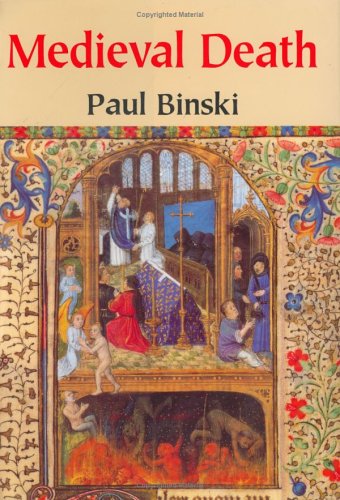
Medieval Death: Ritual and Representation, by Paul Binski

Ebook Download Medieval Death: Ritual and Representation, by Paul Binski
Visualize that you get such specific outstanding encounter as well as expertise by just reviewing a publication Medieval Death: Ritual And Representation, By Paul Binski. How can? It appears to be better when a publication can be the best point to uncover. Books now will certainly appear in printed and also soft documents collection. Among them is this book Medieval Death: Ritual And Representation, By Paul Binski It is so typical with the published books. However, lots of people occasionally have no area to bring the book for them; this is why they cannot review guide anywhere they want.
When going to take the experience or thoughts types others, publication Medieval Death: Ritual And Representation, By Paul Binski can be a great source. It's true. You could read this Medieval Death: Ritual And Representation, By Paul Binski as the source that can be downloaded here. The way to download and install is additionally very easy. You could visit the link web page that our company offer and after that purchase guide to make an offer. Download Medieval Death: Ritual And Representation, By Paul Binski and you can deposit in your very own device.
Downloading and install the book Medieval Death: Ritual And Representation, By Paul Binski in this site listings could offer you much more advantages. It will reveal you the most effective book collections and also finished collections. So many books can be discovered in this website. So, this is not only this Medieval Death: Ritual And Representation, By Paul Binski Nonetheless, this publication is referred to check out because it is an impressive book to give you more opportunity to obtain experiences and ideas. This is straightforward, check out the soft documents of the book Medieval Death: Ritual And Representation, By Paul Binski and also you get it.
Your impression of this publication Medieval Death: Ritual And Representation, By Paul Binski will lead you to acquire just what you specifically require. As one of the motivating publications, this publication will certainly supply the existence of this leaded Medieval Death: Ritual And Representation, By Paul Binski to collect. Also it is juts soft file; it can be your cumulative data in gadget as well as various other tool. The important is that usage this soft file book Medieval Death: Ritual And Representation, By Paul Binski to read and also take the advantages. It is what we imply as book Medieval Death: Ritual And Representation, By Paul Binski will improve your thoughts and also mind. Then, reviewing book will certainly likewise enhance your life high quality much better by taking great action in well balanced.
Medieval Death: Ritual and Representation
A history of the cultural interpretation of death during the Middle Ages, with a focus on religious rituals and artistic representations.
- Sales Rank: #1595726 in Books
- Brand: Brand: Cornell University Press
- Published on: 1996-08-01
- Original language: English
- Number of items: 1
- Dimensions: 1.00" h x 7.14" w x 9.82" l,
- Binding: Hardcover
- 224 pages
- Used Book in Good Condition
Most helpful customer reviews
6 of 6 people found the following review helpful.
A useful read in some parts but impenetrably dense in others
By Whitt Patrick Pond
Paul Binski's Medieval Death: Ritual and Representation is something of a mixed bag. What the reader will get out of it largely depends on what the reader is looking for and what the reader's particular background is. It is helpful to think of the book being presented as described in the subtitle, i.e. medieval death in terms of its ritual in actual life and in terms of its representation in art, literature and religious philosophy and thought.
For myself, I felt Binski's presentation was distinctly more accessible in the first half of the book where he deals with how Christianity of the early medieval period affected how death was viewed and dealt with in Europe, particularly with regard to the rituals of burial, the increasing importance and evolving roles of tombs and of the relics of saints. I learned quite a bit that I was not previously aware of.
For example, the problem that developed regarding tombs in cathedrals and other religious institutions. Initially burials within churches were strictly prohibited, which was a problem in that everyone wanted to be buried within the church as that was considered the most sacred ground. And things being what they were, it was difficult for even the church to say no to kings, so initially exceptions were made for monarchs. Which in turn led to exceptions being made for well-regarded bishops and abbots, which led to exceptions being made for the higher nobility, and eventually to rich merchants. All of which led to the problem of increasing numbers of medieval churches, cathedrals, abbies and such becoming so cluttered with tombs that it became difficult for them to fulfill their original function of conducting religious services. The book is well-illustrated and includes photographs that illustrate the increasingly elaborate tomb designs that, however impressive, only served to add to the clutter.
Another particularly interesting section dealt with the role of effigies in dealing with the death of kings:
"The death of a monarch was a means of disclosing and enforcing forms of power.... When... a king died, an elaborate series of rituals was developed to guarantee the transference of power, and to cancel the inevitable anxieties which arose at such points of passage. In the case of royal burial... the principal strategic problem was where power was located in the period between the death of one monarch and the inauguration of the next. ... In the interim phase after the death of a monarch, the body politic could be incorporated not in a person at all but in an image: a funeral effigy, which could be ritually respected as if it were the king itself.... The power of such images is demonastrated in France by the fact that the Dauphin, the heir to the throne whose reign had notionally begun at his father's death, could not be seen with the image of his father lest two kings should be seen to rule in this state of political liminality."
The section dealing with what evolved as a cult of the relics of saints clarified for me why they were so prized. In medieval belief, formed as it was by the Christian belief in the ultimate literal resurrection of the body, the souls of saints were still connected to the remains of their earthly bodies. And so prayers given in the vicinity of those remains were more likely to be heard by the saints and then passed on to God. In the simplest terms, the relics of saints were regarded as something on the order of a direct hot-line to God, which is why they were so highly prized to the point that one sometimes had the rather unseemly spectacle of clergy and monks of rival institutions sometimes brawling in the streets over who should get the remains of recently deceased religious figures thought to be likely candidates for sainthood.
When the book's focus shifts to the matter of representation, however, the prose becomes increasingly dense and unless the reader has a fairly substantial interest, and background, in matters of medieval art, literature and religious philosophy, particularly with regards to the issue of purgatory in those areas to which Binski devotes a great deal of attention, the lay reader is apt to to become somewhat numbed by the inaccessibility and unlikely to gain much from it. An example of the style in this section would be this:
"Nevertheless, it's fairly clear that to understand the why and when of the transi tomb, we have to sidestop this literary component, tempting as it may be to see the textual elements of such tombs as offering a simple key to their iconogrophy and signification. Transi tombs are regarded too often as a transparent form of text - as the visual equivalent to a literary culture of guilt and penance, as sermons in stone -- with multiple points of reference to a substantial body of thought, to which they are related as second-order epiphenomena. Owst long ago noted that the character of admonitions of the 'such shalt thou be' type were common in Mendicant-inspired sermonizing on death in the tradition going back at least to St. Bernard. But there is no reason to assume from this that tombs of this type were essentially like sermons: their didacticism was much more class-specific."
Overall, I would recommend this book as at least partly worth reading for anyone interested in medieval burial and tombs, in how Christianity affected how people thought of death in relation to the soul and the body, and in particular how cults arose around the relics of saints and how tombs inside cathedrals and monasteries became a serious space problem over the centuries. Beyond that however, I would only recommend it for readers with an interest and background in medieval art and religious thought and in how death was viewed in those veins.
Medieval Death: Ritual and Representation, by Paul Binski PDF
Medieval Death: Ritual and Representation, by Paul Binski EPub
Medieval Death: Ritual and Representation, by Paul Binski Doc
Medieval Death: Ritual and Representation, by Paul Binski iBooks
Medieval Death: Ritual and Representation, by Paul Binski rtf
Medieval Death: Ritual and Representation, by Paul Binski Mobipocket
Medieval Death: Ritual and Representation, by Paul Binski Kindle

Tidak ada komentar:
Posting Komentar